
We know that targeted ads are producing impressive results for BtoC and some BtoB companies. But as a publisher, what’s the winning formula? Knowing your audience is key, and we’ll talk in more general terms about how that works for all content, but we’d still like to focus on targeted ads for a minute or two.
Advertising is evolving and yes, it used to be that putting up a banner ad—filling space on the page—was all you needed to do, but now it is about narrowing down your ads to specific topics and products of interest that jive with reader behavior, preferences and their basic demographics.
It’s a lot to consider, but start by focusing on reader content preferences. They are particularly important when you are trying to individualize ad and content delivery. However, just knowing them isn’t enough. You have to know what to do with that info and have the tools to leverage it for a strong ROI. That’s where a healthy taxonomy, or semantic tagging, system comes in.
What Are Reader Content Preferences?
Okay, in a general sense, you know this. You need only think about the kind of information you like to access online and how you like to do that. But, let’s give it more of a framework.
Reader preferences are:
- Explicit information your readers have shared with you about content (ads, articles, posts, products) coming from you (notice that we don’t say on your site, because there are/should be multiple ways for your readers to access that content).
- The topics or categories they are interested in.
- What they like or don’t like about the content (think reader ratings, reviews, comments).
- Preferred frequency and time of day for accessing/receiving content.
- How they prefer to access the content (device, through email, social media, etc.)
When you combine this information with basic demographic data that you’ve collected on your readers, you have successfully begun to understand your audience and what they need or want from you.
Then, when you take this information and successfully individualize content to meet those explicit preferences you will increase:
- Time spent on your site or with your content
- Number of page views
- Click-throughs on ads
But, wait: you can’t do very easily without a strong taxonomy system.
What is taxonomy?
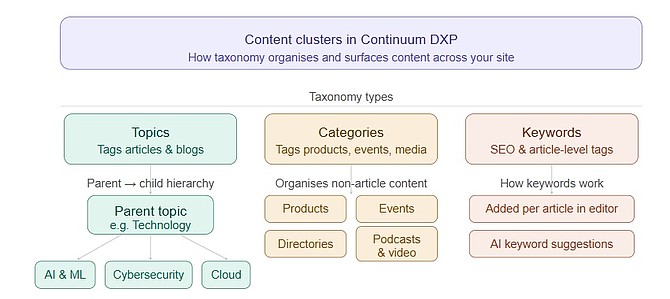
For BtoB publishers (and most other online businesses), taxonomy is the underlying structure that helps you to classify your content. Basically, if you can classify your content into categories and topics, then you can identify what is most appropriate for specific readers and deliver it to them, in context. This is done with semantic tagging, and the more relevant tags you create, the better you can hone in on your content and deliver the most tailored reader experience, based on reader preferences.
Want to know how? You can start by looking at Housing Wire; the leading BtoB housing trade publication uses extensive semantic tagging to deliver content with superior context, relevance and depth.
Their taxonomy enables them to recommend trending articles, similar articles and additional products that complement reader preferences. That’s a good place to start! Next: we’ll take a closer look at individualization.