Most of the people who visit your website leave without telling you who they are. They read an article, maybe two, and move on. For publishers and media brands, that anonymous traffic is the biggest untapped asset on the site.
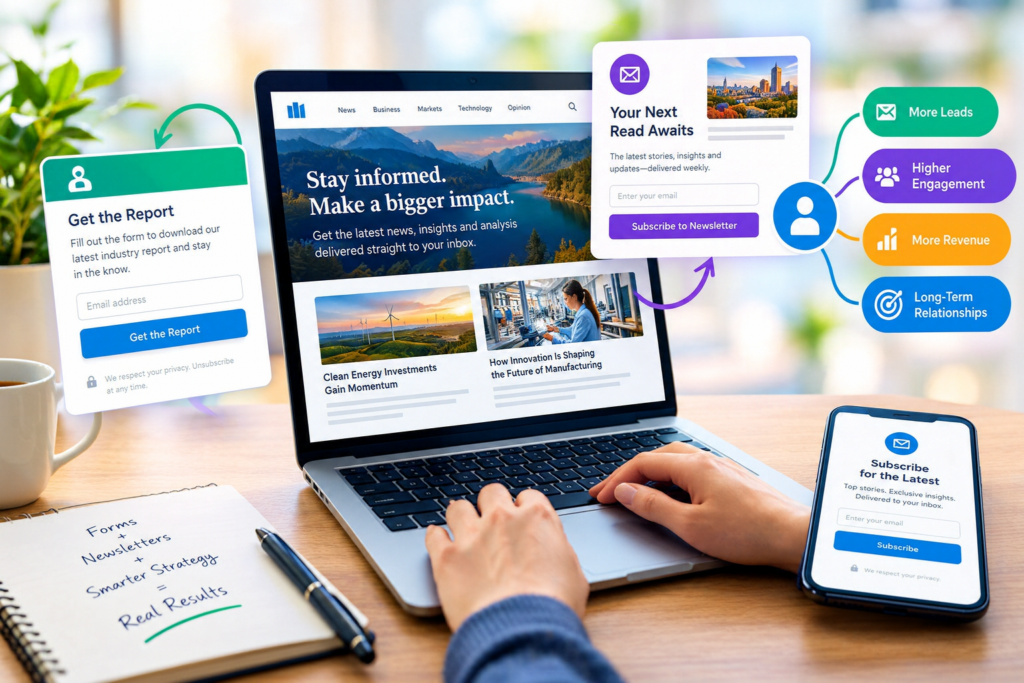
Lead generation is how you change that. A well-placed form turns a casual reader into a known contact. A newsletter turns that contact into a relationship you own. Together, they give you a direct line to your audience that does not depend on search engines, social platforms, or anyone else’s algorithm.
This post covers why lead gen matters more than ever, the proven ways to get more people to fill out your forms, and why newsletters belong at the center of your website strategy.
Why lead gen matters more now
The way people find content is changing fast. AI search tools and answer engines now summarize articles right on the results page, so fewer readers click through. Social platforms keep throttling the reach of links. Third-party cookies are fading out.
That leaves publishers with one clear priority: build first-party relationships with your audience while they are on your site. Every email address you capture is a reader you can reach again on your terms.
Known contacts also unlock more revenue.
They help you:
- Sell sponsorships and advertising with better targeting
- Grow paid subscriptions and memberships
- Promote events, webinars, and research products
- Understand what your audience actually cares about
The best ways to get people to fill out forms
People fill out forms when the value is clear and the effort is low.
Here is what works.
Offer something worth the trade. Nobody gives up an email address for “updates.” Give them a reason: an industry report, a salary survey, a buyer’s guide, event access, or a newsletter with a clear promise. Say exactly what they get and how often.
Ask for less. Every extra field costs you sign-ups. Start with email only. Collect job title, company, or interests later through progressive profiling, asking one or two new questions each time the reader comes back.
Show up at the right moment. Place forms where interest is highest:
- Inline, in the middle or end of an article
- After a reader has viewed two or three pages
- On exit intent, when they move to leave
- On topic-specific landing pages tied to your best content
- During a conversation with your on site Ask My Brand assitant
Match the offer to the content.
A reader on a food safety article wants food safety news, not a general sign-up. Contextual offers convert far better than one generic box.
Make it interactive. Polls, quizzes, calculators, and surveys feel like engagement rather than a sales ask. Adding an optional email field at the end turns participation into a lead.
- Write a button that says what happens. “Get the weekly brief” beats “Submit.” Use first-person or benefit-driven wording.
- Build trust. Add a line on privacy, show subscriber counts or a testimonial if you have them, and make unsubscribing easy.
- Design for mobile. Most of your readers are on phones. Keep forms short, buttons large, and pop-ups easy to close.
- Test and measure. Try different headlines, offers, and placements. Track conversion rate by page and by offer, then double down on what works.
Why newsletters belong at the center of your website strategy
A newsletter is not just an email. It is the engine that brings readers back to your site again and again.
Here is what a strong newsletter program does for you.
- You own the audience. Search rankings and social reach can change overnight. Your email list cannot be taken away by an algorithm update.
- It drives repeat traffic. Every send is a reason to come back. Loyal, returning readers view more pages and stay longer than one-time visitors.
- It deepens engagement. Readers who open your newsletter regularly build a habit with your brand. Habitual readers are the ones most likely to subscribe, register, and renew.
- It creates new revenue. Newsletters carry sponsorships and ads that reach a known, engaged audience. Niche B2B newsletters in particular can command premium rates.
- It feeds your first-party data. Opens, clicks, and topic preferences tell you what each reader cares about. That insight sharpens your content, your ad targeting, and your sales conversations.
- It supports your other products. Newsletters are the natural place to promote events, webinars, research reports, and paid subscriptions.
- It reduces dependence on search. As AI answer engines send fewer clicks, newsletter traffic becomes a steady source you control.
Newsletter strategies that work
The best newsletter programs treat email and the website as one connected system. These strategies help you get there.
- Launch niche newsletters. One general newsletter is a start. Topic-specific newsletters for each beat, market, or audience segment grow faster and engage better because readers get exactly what they want.
- Make the promise specific. “The 5 stories every food processor needs this week, every Tuesday” sells better than “Sign up for our newsletter.”
- Put sign-ups everywhere it makes sense. Article pages, the homepage, topic pages, author pages, event pages, and your search experience should all invite readers to subscribe.
- Write for the click. Short summaries with strong headlines drive readers back to the full article on your site, where they see more content and more ads.
- Welcome new subscribers well. A simple welcome series that introduces your best content and other newsletters builds the habit early.
- Personalize by interest. Use the topics readers choose, and what they click, to tailor what they receive.
- Keep the list healthy. Remove inactive addresses regularly and use a confirmed opt-in. A clean list protects deliverability and makes your engagement numbers more valuable to sponsors.
- Measure what matters. Look past open rates. Track clicks, return visits to the site, and conversions to subscriptions, event registrations, and sponsor leads.
How ePublishing helps
ePublishing builds tools that help publishers turn readers into known, engaged audiences.
Continuum DXP is a digital experience platform built for publishers. It brings your content, audience, and engagement tools together in one place. Features like Enhanced Polling with Lead Generation turn reader participation into new contacts, and Custom Events Landing Pages give your events and offers a dedicated home designed to convert.
Ask My Brand adds AI-powered conversational search to your site, trained on your own content. Readers get answers from your trusted journalism instead of leaving for a general AI tool. That keeps them on your site longer, and every question they ask shows you what your audience wants to know.
Multipub manages subscriptions and audience data, so the readers you capture become subscribers you can serve, renew, and grow.
Start turning visitors into relationships
Lead generation and newsletters work best together. Smart forms capture readers at the moment of interest. Newsletters keep them coming back, build loyalty, and create revenue you control. Start small: pick one high-value offer, add it to your top ten articles, and track the results for 30 days. Then build from there.
Want to see how Continuum DXP and Ask My Brand can help you grow a known, engaged audience? Contact ePublishing to schedule a demo.